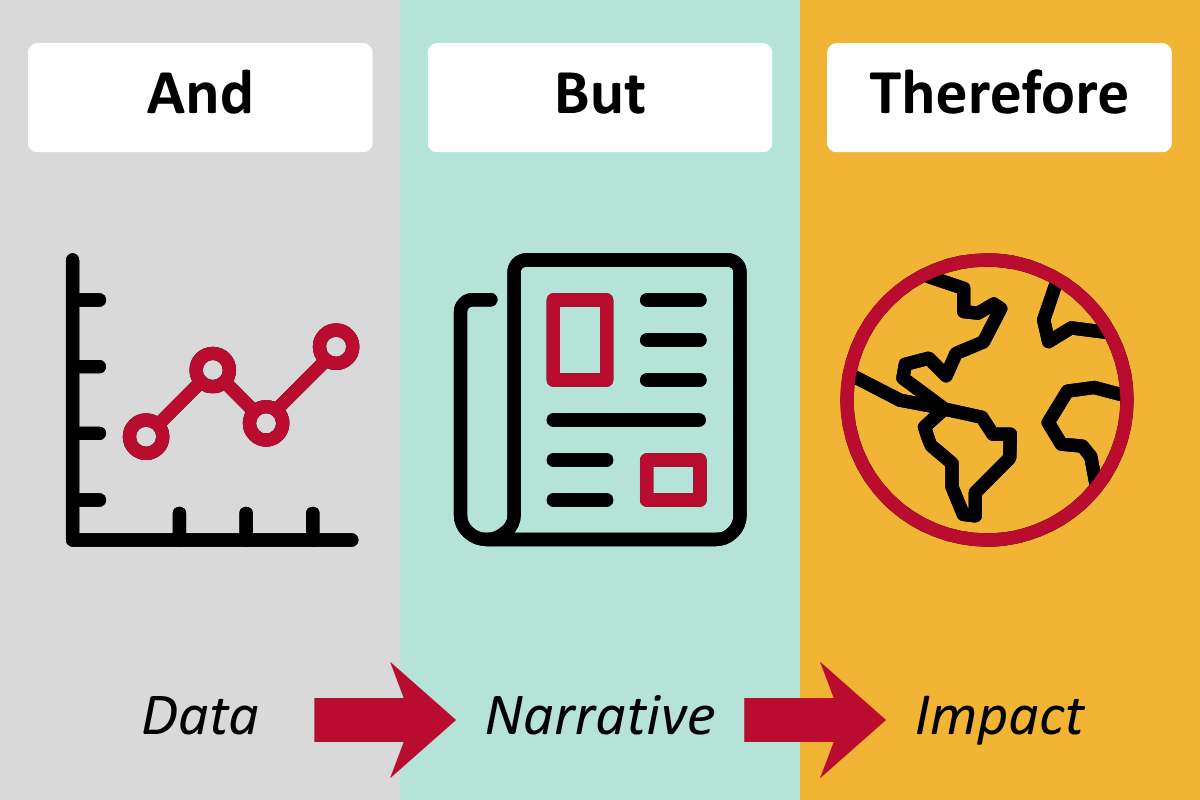
Nothing in science makes sense except in the light of good communication. At WashU Medicine it is our mission to move beyond conventional thinking to transform healthcare, AND our institution is filled with bright and bold researchers and physician-scientists who can accomplish that. If they can effectively communicate their science, then these healthcare professionals can build trust in their communities, secure grant funding to conduct research, and disseminate and implement practices that advance human health. BUT many researchers fail to truly engage their audience because they get caught up in familiar communication patterns that emphasize disjointed facts over storytelling. THEREFORE, we invited Randy Olson, PhD and his ABT team to introduce and workshop their powerful ABT narrative framework to improve scientific communication within and beyond WashU Medicine.
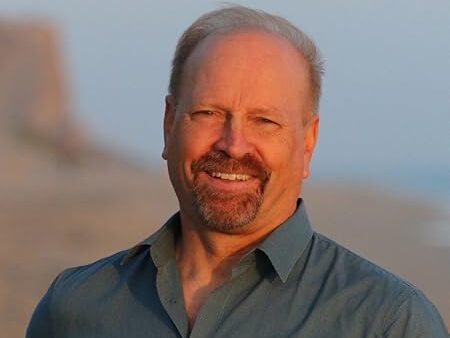
Last month, healthcare professionals from WashU Medicine and other institutions embarked on the journey of understanding the ABT (And, But, Therefore) narrative structure alongside its creator Randy Olson, PhD. This fairly simple concept has transformed scientific communication by adapting storytelling methods to create more compelling scientific presentations.
The ABT follows this structure: First you draw people in, setting the stage with the subject matter and some context—AND. Next you introduce a problem that the audience wants to see resolved—BUT. Lastly, you provide a solution—THEREFORE. This structure follows the progression of narrative storytelling, moving from problem to resolution, beginning to end, as opposed to listing off a bunch of research components in the non-narrative structure (AND, AND, AND) that many healthcare professionals are inclined to follow.
Narrative Structure
Beginning
Set Up
AND
Middle
Problem
BUT
End
Solution
THEREFORE
Olson’s keynote address drew 310 registrants and 155 live attendees from 94 institutions across the country including Yale, Mayo Clinic, UC Davis, Michigan, Vanderbilt, Stanford, Columbia, NYU, and more. This reflects the strong national interest in evidence-based science communication training. But the framework was just the starting point, and Olson emphasized that the process requires collaboration, refinement, and a more in-depth understanding of the full scope of the tool.
In the weeks following the keynote address, Olson and his ABT team offered two rounds of interactive mini courses, demonstrating effective application of the framework. Participants were invited to apply the framework to their research and receive constructive feedback on their work in coaching sessions led by ABT team member Matthew David. This was where ideas were challenged, arguments dissected, and growth emerged.
I was proud of myself when I wrote the first ABT, but then it got torn apart. After that, I realized just how complex the process can be.
Jake Rammell, Otolaryngology R25 trainee
Although a simple concept on the surface, the ABT framework contains many nuances, and the scholars were prompted to apply them to further strengthen their work. Within the AND section, incorporating an IF_____THEN_____ statement effectively introduces goals without prematurely introducing a problem that can dilute the true BUT statement. Within the BUT section, adding DUE TO_____ or BECAUSE_____ orients the audience towards understanding the full scope of the issue and why they should care. Additionally, to ensure the speaker has a high-level focus of the problem and what context is needed to understand it, the team introduced the Dobzhansky template, which states:
Nothing in _____ makes sense except in light of _____.
This template is incredibly powerful for anchoring the theme of a whole research presentation. It intrigues the audience by starting with a broad, visionary statement, and following with clarification through specifics.
To further exemplify the value of the ABT within scientific communication, Olson invited Dianna Padilla, PhD, Professor at Stony Brook University, to lead a special, first-of-its-kind session on research proposals. Padilla demonstrated how to apply the ABT framework to NIH proposal writing and shared examples of successful proposals that used the framework.
Trainees, mentors, and program directors alike had the opportunity to participate in these sessions, and the improvement in communication was undeniable. These healthcare professionals were presenting more compelling and focused arguments that can help them connect with their target audience. Although this is just the beginning of addressing the communication problem that exists in the scientific community, participants now have a structure that will allow them to turn data into narrative, and narrative into impact.
I thought it was a wonderful series of interactions and teaching. Appreciate the opportunity to have Matt and his team provide concrete feedback during the 15-minute didactic sessions. Randy’s grand vision was also very important.
Jay Piccirillo, MD, FACS, TL1 Program Co-Director
We are thankful to everyone who made this series possible. The ABT Team did an incredible job challenging and guiding our community through thought-provoking sessions. This series was sponsored by Jay Piccirillo, MD, FACS, the TL1 program & the Otolaryngology R25 program in partnership with the Center for Health & Science Communication at Becker Library.
If you were unable to join us for the keynote address or research proposals workshop, we invite individuals within the WashU community to watch recordings on Box.