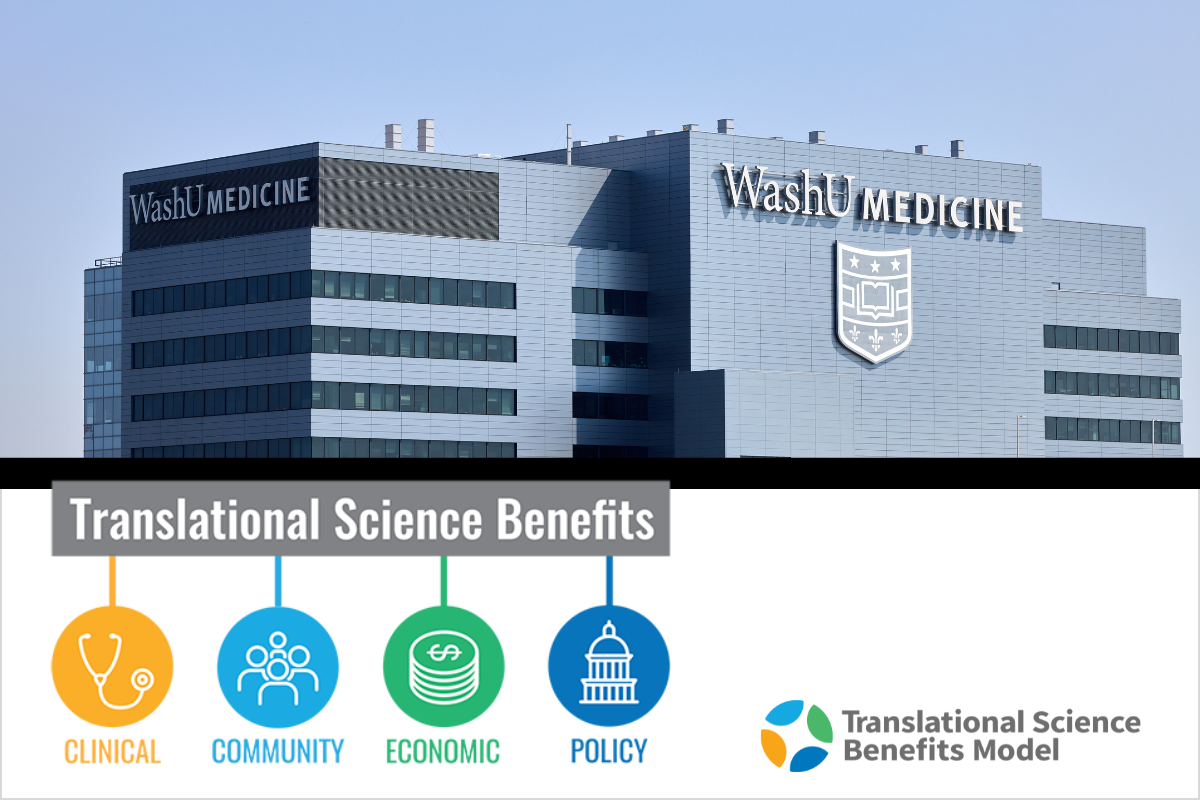
Since its inception, the Translational Science Benefits Model (TSBM) has been shaping how health and clinical scientists think about their research and its real-world impact. When the National Center for Advancing Translational Sciences (NCATS) launched a national challenge to identify standout models of translational science education and training, it created an opportunity to highlight innovative approaches for broader dissemination and implementation. By showcasing how the TSBM has been integrated into WashU Medicine Clinical Research Training Center (CRTC) programs, the TSBM team demonstrated the strength and impact of translational science training at WashU.
The TSBM was developed at WashU in collaboration with the Bernard Becker Medical Library, Center for Public Health Systems Science, and Institute of Clinical and Translational Sciences. The TSBM offers a framework that helps researchers strategize, evaluate, and communicate translational impact in research across clinical, community, economic, and policy domains. Not only is it an invaluable tool at WashU, but it has been adapted by partner institutions nationwide.
The CRTC TL1 Translational Sciences Program and KL2 Career Development Awards Program were featured in the challenge submission, illustrating the significance of the TSBM in training. Both programs have integrated the TSBM approach into their curricula, equipping trainees with the knowledge, skills, and tools needed to accelerate the translation of basic research into clinical and community applications. Further showcasing the training impact, many TL1 and KL2 alumni have gone on to secure NIH funding, publish in high-impact journals, and develop innovations in health care.
Last month, NCATS announced the WashU TSBM team as a challenge winner. This recognition not only elevates the national visibility of WashU’s translational science training programs and approaches, but it also comes with a $10,000 award. These funds will be used to continue accelerating the national dissemination and impact of the TSBM program.